
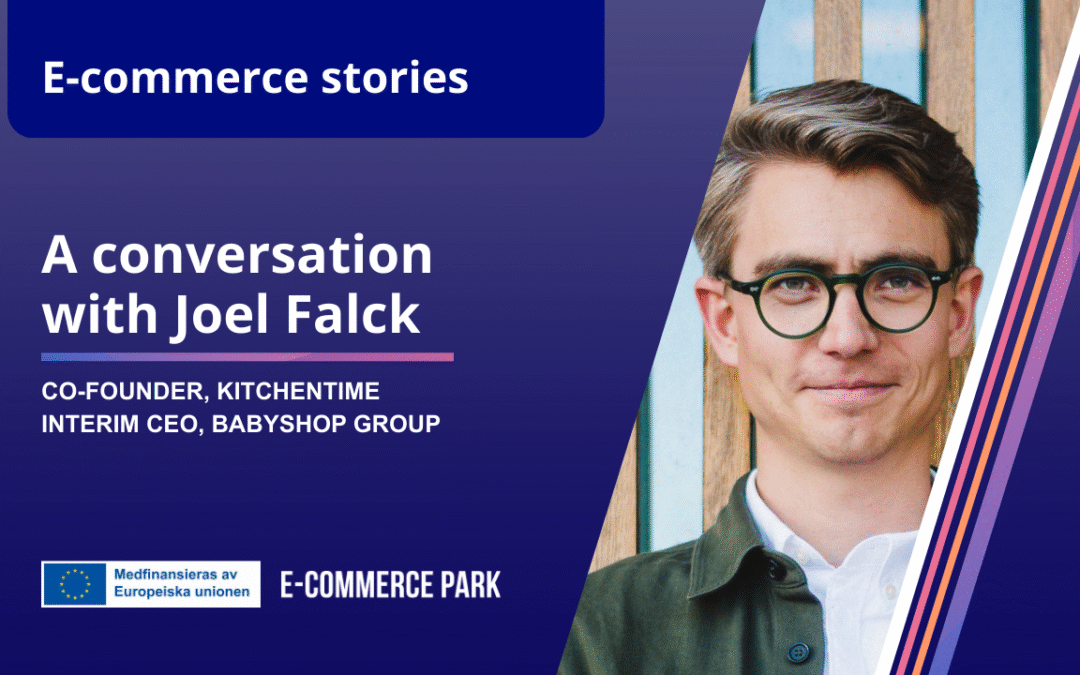
In the latest episode of ”E-commerce stories”, Karsten Deppert speaks to Joel Falck about his exciting, full-of-insights entrepreneurial journey. As a business builder with deep knowledge in e-commerce and digital marketing, Joel brings worthy lessons from his years in the e-commerce business.
Customers come first
A lot has changed since he started his very first e-commerce business, and along the way, he has gathered many valuable lessons, which he generously shared with our community in this conversation. From surrounding yourself with a small team to going global, to being completely transparent, Joel walks us through his career and everything he learned.
One of the lessons that he learned quickly was to have the right product that people are demanding, as well as to think about the customer from the very beginning, making the customers’ experience part of the agenda and the customer service part of the management meetings.
Joel also realised that, when he was ready to bring more people to the team, hiring junior people was not the right move: ”I would get reverse delegation”, he said, meaning that the junior people would be asking him for things before they could do their work. So his recommendation was to hire more senior people, for them to take more responsibility.
Leadership
A defining moment that made Joel grow as a leader was when he had to face his first round of lay-offs. He came as the new manager of an established company that had no money. To ensure its survival, he had to cut the organisation in half, while still building trust with the employees that stayed. He learned he had to move quickly and trust his gut feeling.
How to start your company
When Karsten asked him what he would do if he were to start his company today, these are the suggestions he provided:
- Create a small, capable team you can scale with.
- Go global from day one—Sweden is a small market. Platforms like Shopify make this much easier nowadays.
- Create a product that is as unique as possible.
- Use AI for translations, for research, etc. It makes the processes easier, and at the same time, more challenging because you can do so much more. It is a difficult balance, and the key is ”focus”. For example, you can build a complete Customer Relationship Manager in a short time with AI.
- Hire senior core people to build what you need, instead of hiring agencies, consultants, or platforms.
- Kill what doesn’t work fast.
Plus, he tells us what he’s most excited about at the moment: how AI will change the way we do things. Don’t miss this engaging and encouraging conversation!
Check out other instalments of E-commerce stories here.
What lessons stay with you from this conversation? What will you apply to your own ventures? Join the conversation on LinkedIn!